By the third week of September, the boat ramp at Dover Bay Marina starts telling a different story than it did in July. A truck backs a trailer down the concrete, someone waves off a dock line, and a slip that held a pontoon boat all summer sits open with water lapping against empty pilings. A few hundred feet away, on the paved path that runs along the water, a woman jogs past with a dog on a leash, barely looking up. She isn't here for the marina. She never was.
That contrast is the actual story of fall in Dover Bay. The neighborhood's public identity runs through its 274-slip deep-water marina, the number every brochure leads with. But once boating season winds down, it's not the marina that keeps the place feeling lived-in. It's the trail system, the restaurant that never really closes, and a barn that has been hosting weddings and school fundraisers on a calendar that has nothing to do with tides or dock schedules. Dover Bay was built to look like a summer resort. What actually holds it together in October is closer to a small, quiet trail town that happens to have a marina attached.
274 Slips, Nine Miles of Trail
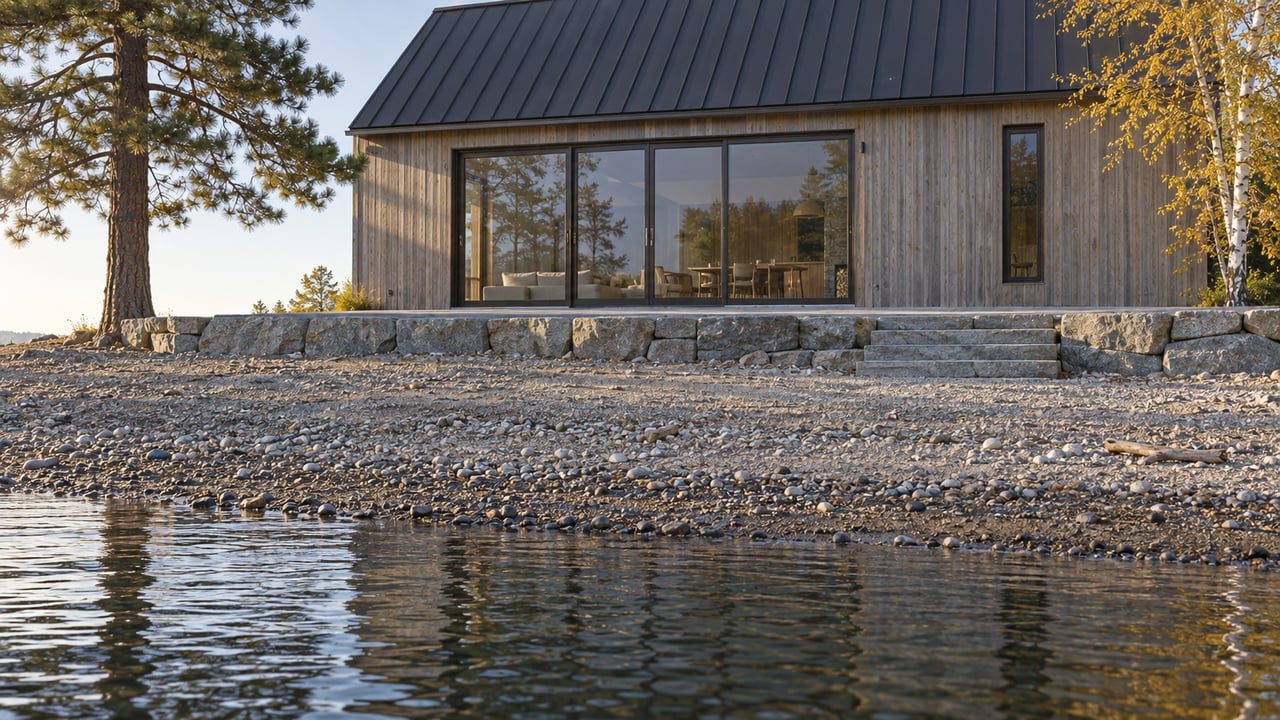
The marina is the number everyone repeats: 274 slips, deep water, a boat launch and gas dock right in the heart of the community. It's real, and it's genuinely one of the larger marinas on Lake Pend Oreille. But it's also a number with a season. Once the lake starts cooling and boats come out for winterizing, that infrastructure goes largely unused until spring.
The trail network doesn't have that problem. Dover Bay sits at the end of the Sandpoint-Dover Community Trail, a paved former rail corridor that runs about 3.3 miles one-way from Larch Street in downtown Sandpoint to a terminus near Loretta Lane in Dover, close to 6.6 miles round trip. From there, the path feeds directly into more than nine miles of trail within Dover Bay itself, threading along the Pend Oreille River and through protected wetlands. Extensions like the Dover Overlook Trail and Sherwood Forest Trail push riders and hikers even further into the surrounding terrain.
None of that mileage cares whether the lake has ice on it. A boater's summer routine and a trail user's fall routine are simply different economies, and Dover Bay was built with enough of both that losing one doesn't leave much of a gap. The number worth remembering isn't 274. It's the nine-plus miles that keep working after the marina empties out.
DISH's Two Clocks
If you want proof the season has turned, you don't need a calendar. You need the restaurant's own website.
Check the online menu pages for DISH at Dover Bay right now and you'll still see the summer line: seven days a week, 11 a.m. to 9 p.m. Check the homepage or the gallery page on the same site and it already reads 4 p.m. to 9 p.m., seven days a week. The kitchen has moved into its fall rhythm faster than the site's own menu pages have caught up, which is a small but telling sign of how quickly Dover Bay's daily pattern shifts once Labor Day passes.
| Summer hours | Current (fall) hours | |
|---|---|---|
| DISH at Dover Bay | 11 a.m. to 9 p.m., 7 days | 4 p.m. to 9 p.m., 7 days |
DISH has been serving the marina since restaurateur Gary Peitz founded it in 2009, later pairing with executive chef Eddie Sneva to build a menu that leans on seasonal changes rather than a fixed rotation. Management has talked publicly about rolling out fall and winter dishes built around heartier, harvest-style plates once the patio crowd thins out. That shift toward a dinner-only clock says something about who's actually walking through the door in October: fewer boaters looking for a midday dock-side lunch, more locals coming for dinner after a walk on the trail.
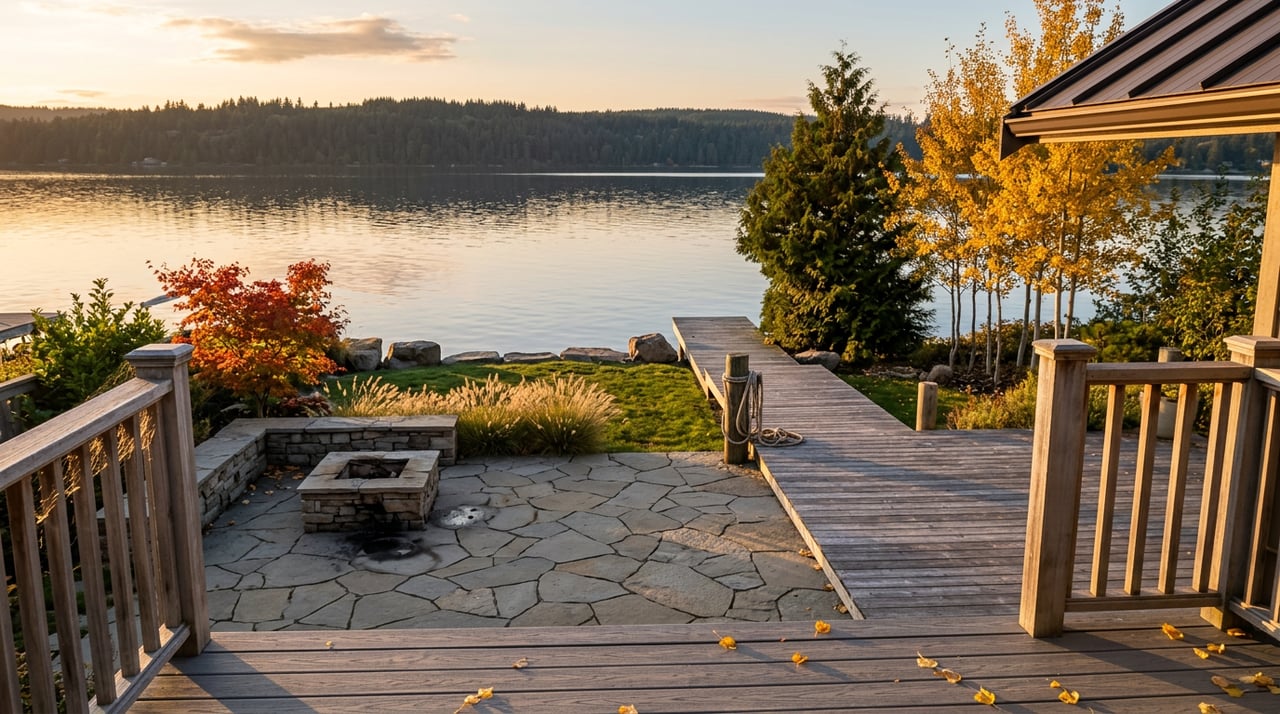
Winter brings its own addition. DISH runs a private heated igloo experience right on the water, seating up to six people for a full dinner menu and warm cocktails inside a covered, climate-controlled dome. It's not a generic patio heater setup. It's a specific, bookable way to continue riverfront dining past October, which is its own quiet argument that Dover Bay's dining culture was never only a summer thing to begin with.
The Barn That Never Kept Boater's Hours
A short walk from the marina, the Homestead Barn runs on a schedule that has never synced up with boat season. Over the years it has hosted weddings, family reunions, and community fundraisers on-site, including a benefit called Concert with a Cause. In the fall, the barn has partnered with Washington Elementary School's PTA to help raise funds for the school and its programs, a tradition that ties Dover Bay's private event space to a public school several miles away in a way that has nothing to do with lake access.
That matters because it shows the social infrastructure of Dover Bay was never actually anchored to the marina. Weddings happen in June and September. School fundraisers happen in the fall. Dog walks and community gatherings happen whenever someone organizes one. The barn's calendar doesn't dip in October the way the boat launch does, because it was never built around water in the first place.
What This Actually Changes If You Live Here
None of this means the marina stops mattering. It means the things that make Dover Bay feel like a neighborhood rather than a seasonal rental cluster are the parts that keep running year-round: the trail, the dinner table, the barn.
For someone who already lives here, fall is when a few practical things get easier. Reservations at DISH open up once the day-tripper crowd off the water thins out. The trail, especially the stretch that connects toward downtown Sandpoint, sees less bike traffic competing with foot traffic. Parking near the marina store loosens up. None of that shows up in a summer visitor's guide, because none of it applies until the docks start clearing out.
It's also a reminder that the parts of Dover Bay built to last through a North Idaho winter, the trail network, the dinner service, the event barn, were the parts designed with residents in mind rather than a July weekend crowd. The marina photographs well. The trail is what you actually use in October.
If you're already walking these paths or booking a fall table at DISH, none of this is new information. It's just worth noticing that the neighborhood doesn't get quieter when the boats come out. It just switches which nine miles matter more.
If you know someone thinking about what year-round life in a place like Dover Bay actually looks like, not just the summer version, Territory Real Estate spends a lot of time walking these same trails and can talk through what the neighborhood offers in every season, not just the one on the postcard. Start the conversation whenever you're ready.